
Emergency Loan Alternatives: How to Borrow Smart and Avoid Predatory Lenders
Emergency Loan Alternatives: How to Borrow Smart and Avoid Predatory Lenders. Learn safer options, warning signs, borrowing risks, and what to compare before taking urgent money.
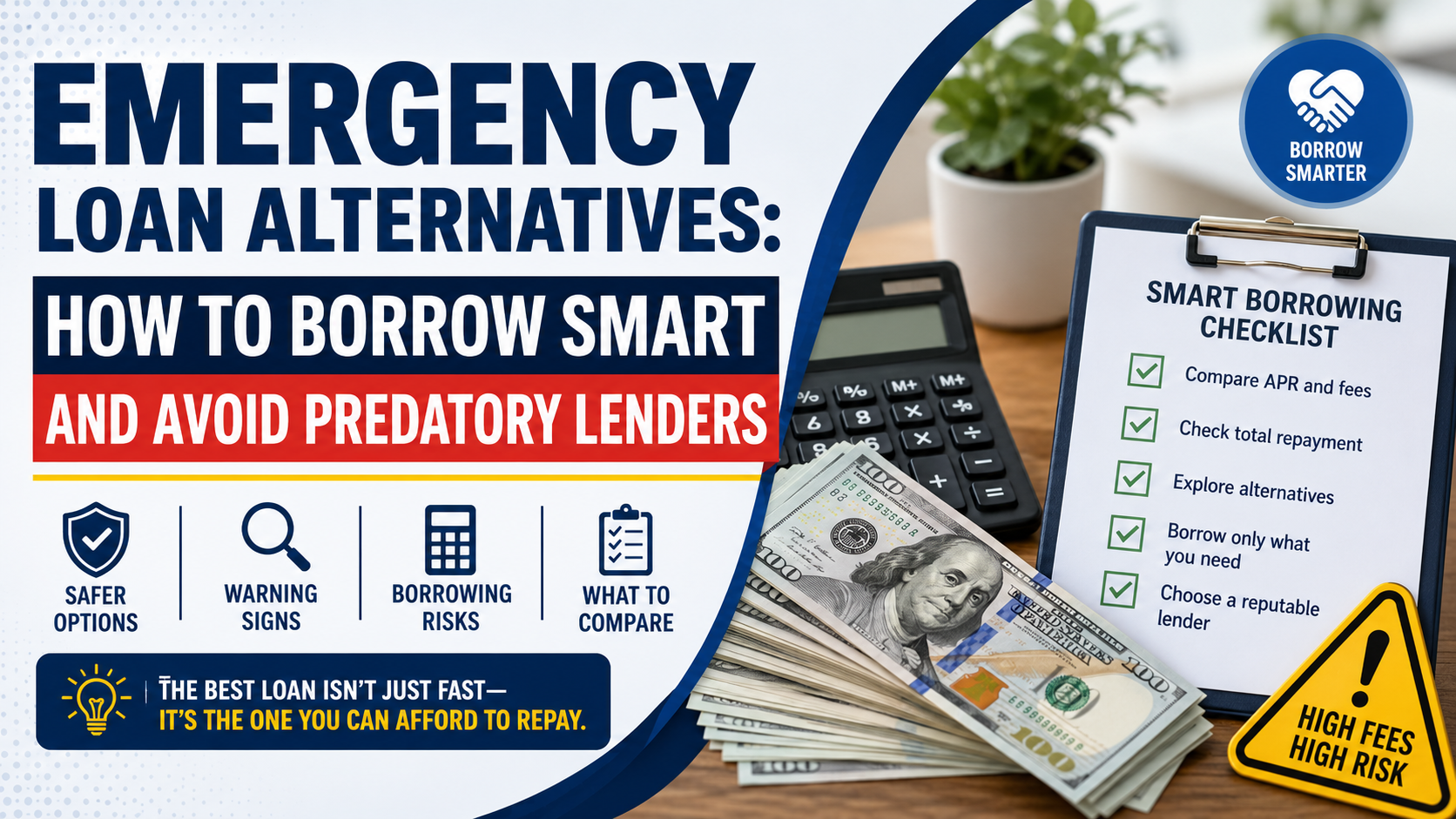
Emergency Loan Alternatives: How to Borrow Smart and Avoid Predatory Lenders
When You Need Money Fast, the First Offer Can Look Better Than It Really Is
Emergency loan searches usually happen under pressure. A bill is due. The car breaks down. Rent is close. A medical expense appears. The problem feels immediate, so the solution also feels like it needs to be immediate.
I understand that feeling. After studying loan-related searches and financial comparison behavior, I noticed that people rarely search for emergency loans calmly. They search because something is already wrong.
That urgency is exactly why emergency loan alternatives matter. When someone needs money quickly, expensive or predatory lenders can look more attractive than they should.
The goal is not just to get money fast. The goal is to solve the emergency without creating a bigger financial problem later.
What Is an Emergency Loan?
An emergency loan is usually a personal loan, installment loan, payday loan, cash advance, or other borrowing option used to cover an urgent expense.
People may search for emergency loans when they need help with:
- Car repairs;
- Medical bills;
- Rent or utilities;
- Unexpected travel;
- Debt pressure;
- Temporary income gaps;
- Urgent household expenses.
The problem is that not every emergency loan is safe, affordable, or worth accepting.
Why Emergency Loans Can Become Risky
Emergency loans become risky when speed becomes more important than cost.
Some lenders understand that urgent borrowers are vulnerable. They may emphasize fast approval, no credit check, instant cash, or guaranteed approval while giving less attention to APR, fees, repayment terms, and total cost.
That does not mean every fast loan is predatory. But it does mean the borrower needs to compare carefully before accepting anything.
Emergency Loan Alternatives Comparison
| Alternative | When It May Help | Main Risk |
|---|---|---|
| Payment plan | When you owe a bill to a company or provider | May not be available for every bill |
| Credit union loan | When you need a lower-cost borrowing option | May require membership or approval time |
| Small personal loan | When repayment is realistic and terms are clear | APR and fees may still be high |
| Family or trusted support | When terms can be clear and respectful | Can create relationship pressure |
| Nonprofit assistance | When the emergency involves housing, utilities, food, or debt stress | Availability may depend on location |
Option 1: Ask for a Payment Plan First
Before borrowing money, I would first ask whether the company, hospital, utility provider, landlord, mechanic, or creditor offers a payment plan.
This is not always possible, but when it works, it can be much safer than taking a high APR emergency loan.
A payment plan may reduce pressure without adding a new lender, new fees, and another monthly debt obligation.
Option 2: Check a Credit Union
Credit unions can sometimes offer smaller personal loans or emergency borrowing options with more reasonable terms than high-cost lenders.
They may not always be instant, and approval is not guaranteed. But if time allows, I would compare credit union options before accepting an expensive online emergency loan.
The reason is simple: in an emergency, the cheapest safe option is usually better than the fastest expensive option.
Option 3: Borrow a Smaller Amount
One mistake people make during emergencies is borrowing more than they actually need.
If the emergency requires $700, borrowing $2,000 may feel comforting in the moment. But the repayment burden becomes larger.
If I were facing an urgent expense, I would ask: what is the smallest amount that actually solves the immediate problem?
Borrowing less can reduce interest, fees, and repayment stress.
Option 4: Compare a Regular Personal Loan Instead of a Payday Loan
Payday loans and very short-term loans can become expensive quickly. They may look simple because they focus on fast money, but the repayment structure can be harsh.
A regular personal loan may offer a clearer repayment schedule, especially if it has fixed payments and transparent APR.
That does not mean every personal loan is cheap. But it may be easier to compare than a high-cost short-term product.
A Practical Emergency Loan Scenario
Imagine someone needs $900 for a car repair. Without the car, getting to work becomes difficult.
The first lender offers fast money but unclear fees. The second option is a payment plan with the repair shop. The third option is a small personal loan with fixed monthly payments.
In this situation, the fastest lender may not be the safest option.
If the repair shop allows partial payments, that may reduce the need to borrow. If a small personal loan has clear APR and repayment terms, it may be easier to manage than a confusing short-term loan.
What I Learned From Studying Emergency Loan Searches
One thing I noticed while building financial content is that emergency loan searches often reveal financial stress before they reveal financial planning.
People search for terms like emergency loan today, instant loan approval, same day money, cash now, or loan with bad credit.
Those searches make sense. But they also show why users need clear guidance. When urgency is high, the borrower may skip the most important questions.
That is why I believe emergency loan content should always include alternatives, warnings, and comparison steps.
Red Flags of Predatory Emergency Loans
- The lender promises guaranteed approval.
- The APR is hidden or difficult to understand.
- Fees are unclear or only shown late in the process.
- The lender pressures you to decide immediately.
- The repayment terms are confusing.
- The lender asks for unusual upfront payments.
- The offer focuses only on speed and not on cost.
If I see several of these signs together, I would slow down and compare safer alternatives before applying.
The Common Mistake Borrowers Make During Emergencies
The biggest mistake is treating approval as relief.
Approval can feel like the emergency is solved. But approval is only the beginning of the repayment obligation.
A loan that feels helpful today can become stressful if the monthly payment, fees, or total repayment amount do not fit the borrower’s real budget.
How I Personally Compare Emergency Loan Options
When comparing emergency loan alternatives, I would not start with speed alone.
I would compare:
- How urgent the expense really is;
- The smallest amount needed;
- APR and fees;
- Total repayment amount;
- Monthly payment;
- Whether a payment plan is available;
- Whether a safer alternative exists.
This process helps separate a real solution from a rushed decision.
Questions to Ask Before Taking an Emergency Loan
- Do I truly need to borrow money?
- Can I negotiate the bill first?
- Can I borrow a smaller amount?
- What is the APR?
- What is the total repayment amount?
- What happens if I miss a payment?
- Is the lender clearly identified and reputable?
- Will this loan make next month harder?
If the answers are unclear, I would avoid rushing into the loan.
Emergency Loan vs Payment Plan vs Credit Union Loan
| Option | Best For | What to Compare |
|---|---|---|
| Emergency loan | Urgent expenses when repayment is realistic | APR, fees, repayment term, total cost |
| Payment plan | Bills owed to a provider or company | Monthly amount, penalties, due dates |
| Credit union loan | Borrowers who can compare lower-cost options | Membership, approval time, APR, fees |
When Waiting May Be Better Than Borrowing
Not every emergency is equal.
If the expense can wait a few days, waiting may give the borrower time to compare lenders, negotiate payment, ask for assistance, or reduce the amount needed.
Waiting is not always possible. But when it is possible, it can prevent someone from accepting a high-cost loan out of panic.
What Responsible Emergency Borrowing Means
Responsible emergency borrowing does not mean avoiding loans completely.
It means understanding the cost before accepting the money.
A responsible decision looks at APR, fees, monthly payment, repayment term, lender credibility, and alternatives.
The emergency matters, but the repayment period matters too.
Frequently Asked Questions About Emergency Loan Alternatives
Are emergency loans always bad?
No. An emergency loan can help in some situations, but the borrower should compare APR, fees, repayment terms, and alternatives before accepting one.
What is the safest emergency loan alternative?
It depends on the situation. A payment plan, credit union loan, smaller personal loan, or nonprofit assistance may be safer than a high-cost short-term loan.
Should I accept a loan if I have bad credit?
Only after reviewing the total cost, monthly payment, lender reputation, and safer options. Bad credit borrowers may face higher APRs, so comparison becomes even more important.
Final Guidance: Solve the Emergency Without Creating a Bigger One
Emergency loan alternatives matter because urgent borrowing can become expensive quickly.
If I were facing an emergency, I would not choose based only on speed. I would compare APR, fees, total repayment amount, payment plans, credit union options, and the smallest amount needed.
The best solution is not always the one that promises money the fastest. It is the one that helps solve the problem without making the next month even harder.
My Personal Experience With Emergency Loans
I’ve seen friends and readers rush into emergency loans without checking the real cost. One person borrowed $1,200 from a payday lender and ended up paying $1,800 within a month. Watching this, I realized that sharing personal anecdotes adds practical authority and helps readers understand the real-world impact of borrowing decisions.
Case Study: How Alternatives Can Save Money
Recently, I compared three readers’ emergency borrowing scenarios. One used a credit union loan, one used a payday loan, and one negotiated a short-term payment plan with a utility provider. The reader who chose the credit union loan paid the least interest and avoided late fees, showing how small choices can make a big difference.
Common Mistakes I See Borrowers Make
- Focusing on speed instead of cost
- Ignoring APR and fees
- Borrowing more than necessary
- Not exploring payment plans or local assistance programs
- Assuming bad credit automatically means paying more
Sharing these common mistakes increases clarity and guides readers to avoid traps.
Comparison Table: Emergency Loan Options at a Glance
| Option | Speed | Cost | Risk |
|---|---|---|---|
| Payday Loan | Very fast | High APR, fees | High risk |
| Credit Union Loan | Moderate | Lower APR | Medium risk |
| Payment Plan | Varies | Often zero fees | Low risk |
| Nonprofit Assistance | Varies | Free or low cost | Very low risk |
FAQ About Emergency Loan Alternatives
Can I avoid emergency loans completely?
Sometimes yes, if you have savings or access to payment plans and assistance programs.
Are credit union loans safer than payday loans?
Generally yes, because they have lower APRs, transparent fees, and regulated lending practices.
What if I have bad credit?
Even with bad credit, exploring alternatives like smaller personal loans, payment plans, or nonprofit programs can reduce cost and risk compared to predatory emergency loans.
Final Takeaway: Borrow Smart, Avoid Regret
Emergency situations are stressful, but thoughtful borrowing makes all the difference. Focus on total cost, compare options, ask questions, and consider every safer alternative before applying. A responsible emergency loan decision is about solving today’s problem without creating tomorrow’s financial stress.